





Introduction: Beyond Basic Sentiment – The Power of Custom AI
In the competitive landscape of US service industries, understanding your customer is paramount. You’re constantly bombarded with feedback: reviews, calls, emails, social media posts. While generic sentiment analysis tools can tell you if a customer is “positive” or “negative,” they often miss the nuances critical to your specific business context. A customer complaining about a “slow connection” in a telecom company is different from a “slow service” complaint at a restaurant, yet a general model might treat them similarly. This is where custom AI models for sentiment analysis become a game-changer.
Building a custom AI model allows you to train the system on your unique data, using your industry’s specific jargon, common complaints, and desired positive outcomes. It’s about moving from broad strokes to precision, empowering you to pinpoint specific issues, prioritize improvements, and ultimately, enhance customer satisfaction and loyalty. This article will guide you through the practicalities, tools, and strategies for leveraging custom AI to transform your customer feedback into actionable intelligence. The future of AI in
Why Go Custom? A Look at General vs. Custom Sentiment Analysis
Before diving into the “how,” let’s clarify the “why.” While off-the-shelf APIs offer a quick start, their limitations often become apparent when dealing with industry-specific language and context.
| Feature | General-Purpose Sentiment APIs | Custom-Trained Sentiment Models |
|---|---|---|
| Data Training | Pre-trained on vast, general datasets (e.g., movie reviews, social media). | Trained specifically on your proprietary customer feedback data. |
| Contextual Understanding | Limited understanding of industry-specific jargon, slang, or nuances (e.g., “flight delay” vs. “system delay”). | Deep understanding of your unique business context, product names, service issues. |
| Accuracy | Moderate to good for general text, but often struggles with domain-specific language, sarcasm, or complex customer emotions. | Significantly higher accuracy for your specific domain, capable of distinguishing subtle positive/negative indicators. |
| Labeling Schemes | Typically fixed categories (positive, negative, neutral) or basic emotional states. | Customizable labels (e.g., “frustration_billing,” “satisfaction_support,” “intent_churn”). |
| Implementation Speed | Very fast setup, integrate API. | Requires data collection, labeling, training, and deployment (more time upfront). |
| Cost Model | Typically per-API call. Low initial cost, scales with usage. | Initial investment in data preparation and model development; ongoing compute and maintenance. Potentially lower cost at high volume. |
| Insights Level | High-level sentiment trends. | Deep, actionable insights directly relevant to business improvements and operational changes. |
For US service industries striving for excellence, the investment in a custom model can yield a significant competitive advantage through truly actionable insights. Using computer vision for quality
Tools & Solutions for Building Your Custom Sentiment Model
Building a custom AI model doesn’t necessarily mean hiring a massive data science team from day one. Modern platforms and frameworks offer varying levels of abstraction to help you achieve your goals. Here are a few strong contenders:
1. Google Cloud Vertex AI (or similar Managed ML Platforms like AWS SageMaker, Azure ML)
Vertex AI is Google Cloud’s unified machine learning platform designed to make building, deploying, and scaling ML models easier. It caters to a range of users, from data scientists to developers, with tools for data labeling, model training (including AutoML options), and deployment.
- Key Features:
- Managed Datasets & Labeling: Tools to upload and label your custom text data, essential for training.
- AutoML Text: Allows you to train high-quality custom models with minimal code, uploading your labeled data and letting Google’s algorithms handle model selection and tuning.
- Custom Training: For more control, you can run custom training code (TensorFlow, PyTorch, scikit-learn) on Google’s scalable infrastructure.
- Model Deployment & Monitoring: Easily deploy your trained models as APIs and monitor their performance over time.
- Integration: Seamless integration with other Google Cloud services.
- Pros:
- Reduced Operational Overhead: Google manages the underlying infrastructure, letting you focus on data and models.
- Scalability: Built for enterprise-grade scalability, handling large datasets and high query volumes.
- Accessibility: AutoML features lower the barrier to entry for businesses without deep ML expertise.
- Robustness: Benefits from Google’s extensive research and infrastructure.
- Cons:
- Vendor Lock-in Potential: Deep integration with Google Cloud ecosystem can make migration challenging.
- Cost Complexity: Pricing can become complex, based on compute, storage, data labeling, and prediction requests.
- Less Granular Control: While custom training is available, AutoML abstracts away some details, which advanced practitioners might find limiting.
- Pricing Overview: Typically usage-based. Costs accrue for data storage, data labeling services, training compute hours (CPU/GPU), model hosting, and prediction requests. Free tiers are often available for initial experimentation.
2. Hugging Face Ecosystem (Transformers, Datasets, Inference Endpoints)
Hugging Face has become a central hub for natural language processing (NLP), offering an ecosystem of pre-trained models, libraries, and tools that simplify building and deploying state-of-the-art NLP solutions. It’s particularly strong for fine-tuning existing powerful models.
- Key Features:
- Transformers Library: Provides thousands of pre-trained models (e.g., BERT, RoBERTa, XLNet) that can be fine-tuned on your specific sentiment analysis task.
- Datasets Library: Simplifies loading and processing your custom text data for training.
- Model Hub: A vast repository of community-contributed and official models, making it easy to find a strong starting point.
- Accelerate: Tools to easily train models across multiple GPUs or CPUs.
- Inference Endpoints: Managed service for deploying your fine-tuned models for production use.
- Pros:
- State-of-the-Art Models: Access to cutting-edge NLP models that deliver high accuracy.
- Flexibility & Control: More control over the training process, model architecture, and hyperparameter tuning.
- Cost-Effective (for training): Leveraging open-source libraries means you only pay for your compute infrastructure (e.g., cloud VMs or local machines).
- Strong Community Support: Large and active community, abundant tutorials and resources.
- Cons:
- Higher Technical Barrier: Requires more programming skills (Python) and understanding of ML concepts.
- Infrastructure Management: You are responsible for setting up and managing your training and deployment infrastructure unless using Hugging Face’s paid inference services.
- Deployment Complexity: Deploying and scaling models in production can be more involved without managed services.
- Pricing Overview: The core libraries are open-source and free. Costs arise from your compute resources (cloud GPUs, CPUs), data storage, and potentially Hugging Face’s paid services like Inference Endpoints or AutoTrain for simplified fine-tuning.
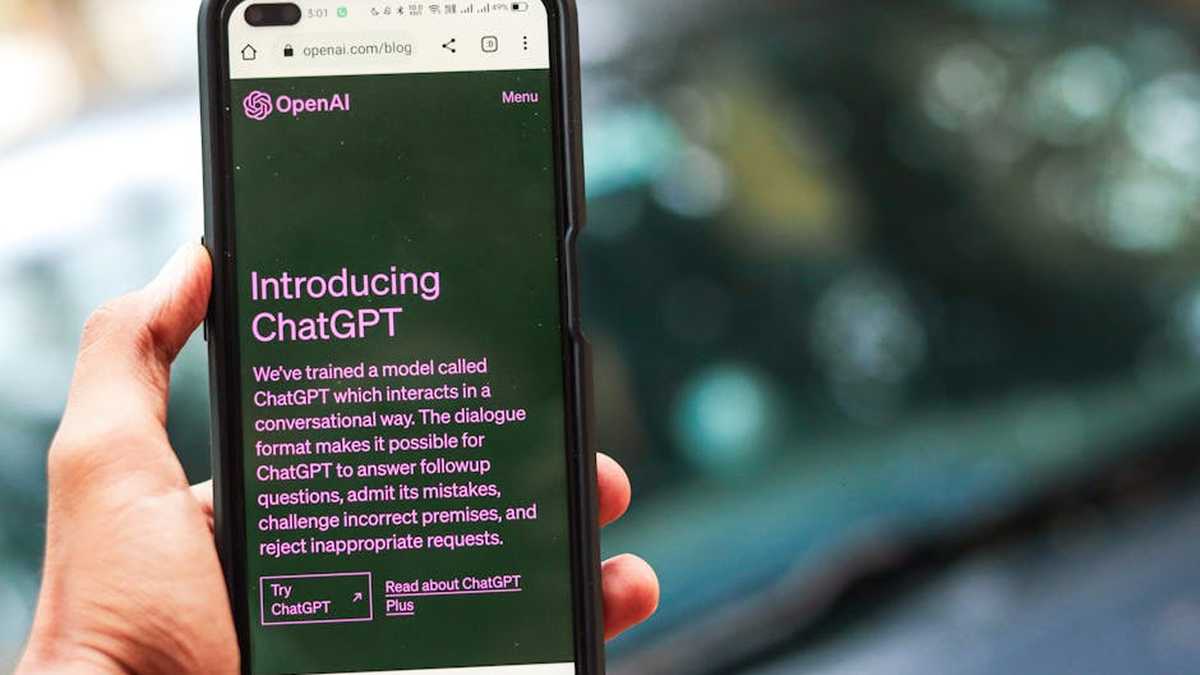
3. OpenAI API (GPT-3/GPT-4 for Fine-tuning or Advanced Prompt Engineering)
While often seen as a general-purpose language model, OpenAI’s API offers powerful capabilities for custom sentiment analysis through both fine-tuning and advanced prompt engineering. You’re not building a model from scratch, but rather adapting their immensely powerful foundational models to your specific needs.
- Key Features:
- Zero-Shot & Few-Shot Learning: Achieve impressive sentiment analysis results by simply crafting well-designed prompts, providing examples directly in the input, without explicit model training.
- Fine-tuning: For higher accuracy and more consistent results on your specific data, you can fine-tune OpenAI models (e.g., GPT-3.5) with your custom labeled datasets. This adapts the model’s weights to your domain.
- High Quality: Access to some of the most advanced language models available, capable of understanding complex language, nuance, and even sarcasm.
- API Access: Easy integration into applications via a straightforward API.
- Pros:
- Reduced Data Needs (Prompt Engineering): For many tasks, you might need very little or no labeled data to start, just clever prompting.
- Extremely Powerful Models: Can handle nuanced sentiment that simpler models might miss.
- Rapid Prototyping: Get custom sentiment analysis running very quickly with prompt engineering.
- Continual Improvement: OpenAI continuously improves its foundational models, which your applications can benefit from.
- Cons:
- Cost per Token: Can become expensive for very high volumes of text processing, as you pay per token.
- Data Privacy (for prompts): While fine-tuning data is generally kept private, sending sensitive customer feedback directly via prompts might require careful consideration of privacy policies and agreements.
- Less Direct Control: You’re working with a black-box model; debugging why it made a certain decision can be challenging.
- Output Consistency: Prompt-based sentiment can sometimes be less consistent than a fully fine-tuned model for specific, repetitive tasks.
- Pricing Overview: Usage-based, primarily by tokens processed (both input and output) for API calls. Fine-tuning incurs additional costs for training data processing and hosting the fine-tuned model. Costs vary significantly by model (e.g., GPT-4 is more expensive than GPT-3.5).
Practical Use Case Scenarios in US Service Industries
How can custom sentiment analysis translate into real business value? Here are a few examples:
- Call Center Transcripts: Automatically identify calls where customers express high frustration, churn intent, or satisfaction with specific agents. This allows for targeted coaching, proactive retention efforts, and quick escalation of critical issues.
- Social Media & Review Monitoring: Go beyond “positive” or “negative” to understand *why* customers love or hate specific aspects of your service. For a hotel chain, it could distinguish between “cleanliness issues” vs. “slow check-in” vs. “great bed comfort.”
- Survey & Open-Text Feedback Analysis: Uncover hidden patterns and emerging trends in unstructured survey responses. Instead of manually reading thousands of comments, quickly identify the most prevalent themes of dissatisfaction or delight, allowing for data-driven product or service improvements.
- Chatbot & Virtual Assistant Optimization: Analyze user interactions to determine if the chatbot successfully resolved the sentiment. If users consistently become frustrated when asking about billing, it highlights an area for chatbot improvement or a need for better self-service options.
- Employee Feedback (Internal): While often overlooked, analyzing internal employee feedback (e.g., from suggestion boxes, HR surveys) can pinpoint areas of concern or appreciation within the company culture, impacting employee retention and morale.
Selecting the Right Approach & Tool for Your Business
Choosing the best path for your custom sentiment analysis project depends on several factors:
- Your Team’s Technical Expertise:
- Low/No ML Expertise: Start with AutoML features on cloud platforms (e.g., Vertex AI AutoML) or advanced prompt engineering with OpenAI for rapid prototyping.
- Some Data Science/ML Engineers: Hugging Face offers maximum flexibility and control if you have the internal talent. Cloud platforms with custom training capabilities are also a strong option.
- Data Availability & Quality:
- Limited Labeled Data: OpenAI’s few-shot prompting might be your best bet initially. Cloud platforms offer data labeling services, but this adds cost and time.
- Abundant Labeled Data: You’sre well-positioned for traditional fine-tuning with Hugging Face or custom training on cloud platforms.
- Budget & Cost Model:
- Predictable Costs: Managed services (cloud platforms, OpenAI API) have clear usage-based pricing, but can scale up with volume.
- Cost-Optimization Focused: Leveraging open-source tools like Hugging Face on your own cloud instances gives you more control over infrastructure costs, but requires more management.
- Scalability Requirements:
- High Volume / Enterprise Grade: Cloud platforms (Vertex AI, SageMaker, Azure ML) are inherently designed for this.
- Moderate Volume / Growing: Hugging Face with robust deployment strategies, or OpenAI API, can also scale effectively.
- Time to Market:
- Fastest: OpenAI API with prompt engineering, followed by AutoML options.
- Moderate: Fine-tuning with Hugging Face or custom training on cloud platforms will take more time for data preparation and training cycles.
- Data Sensitivity & Compliance:
- Ensure any platform or API you choose meets your industry’s data privacy and compliance standards (e.g., HIPAA for healthcare, PCI for finance). Consider on-premise or private cloud deployments for highly sensitive data, which typically involves more setup.
Conclusion: Actionable Insights Await
Building a custom AI model for sentiment analysis in your US service industry can seem like a significant undertaking, but the payoff in deeper, more accurate, and actionable customer insights is substantial. Generic solutions provide a starting point, but a custom-trained model understands the unique heartbeat of your business, turning raw customer feedback into a powerful strategic asset.
Whether you choose the managed convenience of cloud AI platforms, the open-source flexibility of the Hugging Face ecosystem, or the cutting-edge power of OpenAI’s models, the key is to start with a clear problem, good quality data, and an iterative approach. Begin with a specific use case, refine your data labeling, and continuously evaluate your model’s performance against your business objectives. The journey to superior customer understanding is an ongoing one, and custom AI is a critical tool in your arsenal to navigate it successfully. Building a No-Code AI Assistant
Remember, this isn’t about magical solutions or guaranteed outcomes, but about applying intelligent tools strategically to gain a competitive edge and drive continuous improvement in your services. Automating US Mortgage Application Processing
Related Articles
- The future of AI in fraud detection for US insurance companies: a deep dive.
- Using computer vision for quality control and defect detection in US manufacturing.
- Building a No-Code AI Assistant for Small Business Customer Service in American SMBs.
- Automating US Mortgage Application Processing with Intelligent Document Understanding (IDU) AI.
- Automating Data Migration from Legacy Systems with AI for US Government Agencies.
What tangible ROI can our US service industry business expect from investing in a custom AI sentiment analysis model?
A custom AI sentiment analysis model is designed to deliver significant, measurable ROI by directly addressing the unique challenges of your US service industry. You can expect improved customer retention through proactive issue resolution, enhanced operational efficiency by pinpointing critical service gaps, and better resource allocation based on real-time feedback insights. Unlike generic solutions, our custom models precisely understand your industry’s specific jargon and customer nuances, leading to up to a 20-30% improvement in accuracy for sentiment detection, which translates into fewer misinterpretations, faster decision-making, and a direct impact on your bottom line by reducing churn and optimizing service delivery costs.
How effectively can your custom AI models integrate with our existing CRM, contact center platforms, and internal data sources unique to the US service sector?
Our custom AI models are engineered for seamless integration, a critical factor for decision-makers in the US service industry. We specialize in building direct connectors and APIs that allow the model to ingest data from diverse sources like Salesforce, Zendesk, Genesys, custom databases, call transcripts, chat logs, and survey platforms. This ensures your sentiment analysis is always working with the most comprehensive and relevant customer feedback. Our approach prioritizes minimal disruption to your current operations, delivering a unified view of customer sentiment directly within your familiar workflows, empowering your teams with actionable insights without changing their core tools.
What is the typical implementation process and timeline for developing and deploying a custom sentiment analysis solution, and what resources will our team need to dedicate?
Our implementation process for a custom sentiment analysis AI model is structured for efficiency and transparency, typically spanning 10-16 weeks from discovery to full deployment, depending on data complexity and integration points. It begins with a deep dive into your specific business goals and data sources, followed by data preparation, model training, rigorous testing, and phased deployment. Your team’s primary dedication will be during the initial discovery and data access phases, providing domain expertise, and then during user acceptance testing. We manage the heavy lifting of AI development, integration, and training, ensuring a smooth transition with comprehensive training and documentation for your end-users, minimizing internal resource strain.
Beyond initial deployment, what does ongoing maintenance, model refinement, and scalability look like for a custom sentiment analysis solution in a dynamic service environment?
Our commitment extends far beyond initial deployment. We provide robust ongoing maintenance and model refinement services crucial for the evolving nature of customer feedback in the US service industry. This includes continuous monitoring of model performance, periodic retraining with new data to adapt to changing customer language and service offerings, and performance optimization. The models are built with scalability in mind, capable of handling growing volumes of feedback data and integrating with additional platforms as your business expands. We offer tiered support packages, ensuring your custom AI solution remains accurate, relevant, and a valuable asset that grows with your organization, safeguarding your investment long-term.