




Introduction: Conquering the Trails with Unshakable Footage
Mountain biking is an exhilarating sport, but capturing its dynamic essence requires specialized gear. For action cameras mounted to helmets, handlebars, or chest straps, two critical performance metrics dictate success: image stabilization, which transforms jarring vibrations into fluid video, and battery life, ensuring your camera doesn’t die mid-descent. This data-driven analysis dissects the market’s leading contenders, evaluating their technical specifications and real-world performance to guide mountain bikers toward the ultimate camera for their off-road pursuits.
Comparative Analysis: The Contenders at a Glance
| Feature | GoPro HERO12 Black | DJI Osmo Action 4 |
|---|---|---|
| Max Video Resolution | 5.3K60, 4K120, 2.7K240 | 4K120, 2.7K120, 1080p240 |
| Image Stabilization | HyperSmooth 6.0 with AutoBoost | RockSteady 3.0+, HorizonSteady, HorizonBalancing |
| Battery Capacity | 1720 mAh Enduro Battery (included) | 1770 mAh Extreme Battery (included) |
| Typical Battery Life (1080p30) | ~155 minutes (with Enduro) | ~160 minutes (with Extreme) |
| Typical Battery Life (4K60) | ~70 minutes (with Enduro) | ~70 minutes (with Extreme) |
| Sensor Size | 1/1.9-inch CMOS | 1/1.3-inch CMOS |
| Display(s) | Front & Rear LCD (rear touch) | Front & Rear Touchscreen |
| Waterproofing | 10m (33ft) without case | 18m (59ft) without case |
| Mounting System | Built-in folding fingers | Magnetic quick-release + Frame with folding fingers |
| Weight | 154g | 145g |
| Key Differentiators | 8:7 Aspect Ratio, HDR Video, Bluetooth Audio, GP2 Processor | Superior Low-Light, Color Temperature Sensor, Native Vertical Shooting |
Product Deep Dive: Detailed Analysis
1. GoPro HERO12 Black
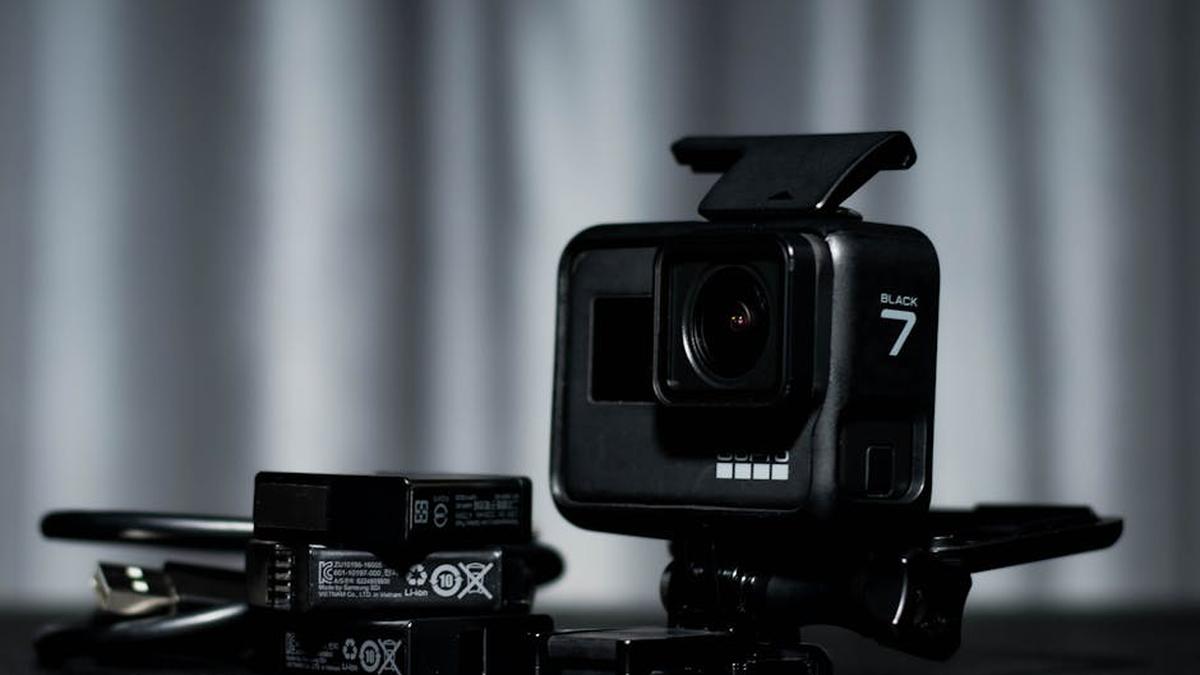
The GoPro HERO12 Black continues GoPro’s dominant presence, refining its core strengths with key performance enhancements. Leveraging the robust GP2 processor, it delivers exceptional image fidelity and boasts what is widely considered the industry’s most advanced digital stabilization system.
Key Features:
- HyperSmooth 6.0 with AutoBoost: This flagship stabilization dynamically adjusts to camera shake in real-time, ensuring remarkably smooth footage across varied terrain and intense impacts.
- Extended Battery Life (Enduro): The camera ships standard with the high-performance Enduro battery, which significantly improves cold-weather performance and extends recording times by up to 2x in certain modes compared to older standard batteries.
- HDR Video: Captures enhanced detail in both bright highlights and deep shadows, crucial for complex lighting conditions encountered on shaded trails and open vistas.
- 8:7 Aspect Ratio Sensor: This unique sensor dimension allows for maximum vertical capture, providing immense flexibility to crop to 9:16 vertical for social media or 16:9 widescreen post-capture without sacrificing resolution.
- Bluetooth Audio Support: Enables direct connection to wireless headphones or microphones, vastly improving audio quality and monitoring capabilities.
Pros:
- Unrivaled Stabilization: HyperSmooth 6.0 consistently delivers industry-leading stability, making even the roughest rides appear cinematic.
- Resolution & Frame Rate Versatility: 5.3K resolution and high frame rates (4K120, 2.7K240) provide extensive options for detail, slow-motion, and reframing.
- Robust Ecosystem: Benefits from a vast array of official and third-party accessories, mounts, and a strong global community.
- Enduro Battery as Standard: Out-of-the-box improvements in runtime and cold-weather resilience.
Cons:
- Thermal Management: Can still experience overheating during prolonged high-resolution, high-frame-rate recording sessions, particularly in warm environments.
- Menu Complexity: While improved, the menu system can still feel somewhat intricate for new users.
- Incremental Updates: Features are strong, but some users may desire more revolutionary changes between generations.
Who Should Buy:
The GoPro HERO12 Black is the top choice for mountain bikers who demand the absolute pinnacle of image stabilization and video quality. Content creators prioritizing maximum flexibility for post-production (e.g., reframing 8:7 footage) and those deeply invested in the extensive GoPro accessory ecosystem will find it indispensable. Smart Plugs with Energy Monitoring
Who Should Avoid:
Individuals on a strict budget may find its premium price prohibitive. Users seeking a more straightforward, intuitive user interface or those consistently recording in extremely hot conditions where thermal limitations could be an issue might explore alternatives. Wi-Fi 7 Routers: Is Upgrading
2. DJI Osmo Action 4
The DJI Osmo Action 4 emerges as a powerful contender, distinguishing itself with exceptional low-light performance, an intuitive user experience, and a remarkably convenient magnetic mounting system. Its notably larger sensor for an action camera provides a significant advantage in the challenging, often shaded, lighting conditions common on mountain bike trails. Ultra-Wide Monitors for Professional Video
Key Features:
- 1/1.3-inch Sensor: A larger sensor than most action cameras directly translates to superior low-light performance, reduced noise, and improved dynamic range, making it ideal for varying light conditions under tree cover.
- RockSteady 3.0+ & HorizonSteady: Offers highly effective stabilization. HorizonSteady maintains a perfectly level horizon even with extreme camera tilt, invaluable for dynamic riding.
- Extreme Battery: Specifically designed for extended use and robust cold-weather performance, providing competitive recording durations.
- Magnetic Quick-Release Mount: DJI’s innovative magnetic system allows for incredibly fast and secure attachment and detachment, significantly streamlining camera changes on the trail.
- Native Vertical Shooting: The camera’s design and sensor optimize true vertical video capture without resolution loss, perfect for social media platforms.
- Color Temperature Sensor: Improves white balance accuracy in complex and rapidly changing lighting scenarios, ensuring more natural and consistent footage.
Pros:
- Exceptional Low-Light Performance: The larger sensor provides a distinct advantage in dim conditions, delivering cleaner, more detailed video.
- User-Friendly Interface: Highly intuitive touchscreen operation on both front and rear displays enhances ease of use while riding.
- Magnetic Mounting System: Offers unparalleled convenience and security for quickly swapping mounts.
- Excellent Thermal Management: Known for its ability to sustain long recordings in high-resolution modes without overheating, even in warmer climates.
- Deeper Waterproofing: Rated to 18m without a case, offering greater peace of mind in wet conditions.
Cons:
- Stabilization Nuance: While superb, some expert analyses suggest HyperSmooth 6.0 holds a marginal edge in the most extreme, high-frequency vibration scenarios.
- Accessory Ecosystem: Although rapidly expanding, it is not as vast or mature as GoPro’s long-established market.
- Max Resolution: Caps at 4K, lacking GoPro’s 5.3K option for ultimate detail or post-production reframing flexibility.
Who Should Buy:
The DJI Osmo Action 4 is the ideal choice for mountain bikers who frequently ride in varied and challenging lighting conditions, especially trails with deep shadows, where its low-light capability will be a game-changer. Riders who prioritize a streamlined, intuitive user experience and the convenience of the magnetic quick-release system will also find it highly satisfying. It is also preferred for those concerned about camera overheating during long recording sessions. Laptop Cooling Pads for Gaming
Who Should Avoid:
Users who absolutely require 5.3K resolution for maximum post-production flexibility or those with a significant existing investment in the GoPro accessory ecosystem might find the Action 4 less appealing. While its stabilization is top-tier, those seeking the absolute bleeding edge in digital stabilization may still lean towards GoPro. Budget-Friendly 3D Printers for Hobbyists:
Pricing Insight
Both the GoPro HERO12 Black and DJI Osmo Action 4 typically launch at comparable price points, generally within the $399-$449 USD range, depending on regional markets and promotional bundles. Historically, GoPro products tend to retain their value slightly better, but DJI frequently offers competitive bundles that include additional batteries or essential accessories. It is advisable to compare current retail pricing from authorized dealers, as pricing can fluctuate with promotions, seasonal sales, or new product announcements. Always consider the total cost of ownership, accounting for necessary accessories such as extra batteries, specialized mounts, and protective cases.
Alternatives to Consider
- Insta360 Ace Pro: Features a large 1/1.3-inch sensor co-engineered with Leica, offering exceptional image quality and a unique flip-up screen. Its FlowState stabilization is highly competitive.
- Insta360 GO 3: An ultra-compact action camera with a unique magnetic mounting system, excellent for discreet or unique perspectives. Its stabilization is impressive for its size, though battery life is optimized with its Action Pod.
- GoPro HERO11 Black / DJI Osmo Action 3: Previous generation models of these cameras often provide significant cost savings while still delivering excellent performance, especially if the absolute latest features are not critical. They remain very capable cameras for mountain biking.
Buying Guide: Key Considerations for Mountain Bikers
- Image Stabilization Performance: This is paramount. Look for cameras with advanced digital stabilization (e.g., HyperSmooth, RockSteady, FlowState) that can effectively smooth out high-frequency vibrations and impacts. Prioritize cameras with excellent horizon leveling capabilities.
- Battery Life: Carefully assess advertised battery life for your typical recording resolutions and frame rates (e.g., 4K60, 1080p30). Factor in cold weather performance and the availability/cost of spare batteries.
- Durability and Waterproofing: Mountain biking is inherently rough. Ensure the camera is robust, shockproof, and ideally waterproof to at least 10 meters (33 feet) without an external case to handle unexpected weather or spills.
- Mounting System: Evaluate the ease, security, and versatility of the mounting system. Magnetic quick-release systems (DJI) or integrated folding fingers (GoPro) offer superior convenience and reliability compared to older screw-in mechanisms.
- Low-Light Performance: Trails often involve shaded sections or riding during dawn/dusk. Cameras with larger sensors (e.g., 1/1.3-inch) will generally produce cleaner, more detailed footage with better dynamic range in challenging light.
- User Interface and Ergonomics: A camera that is easy to operate while wearing gloves or when mounted is crucial. Look for intuitive touchscreens and accessible physical buttons.
- Resolution and Frame Rates: While 5.3K offers maximum detail, 4K at 60fps or 120fps is often the optimal balance for detail, smooth motion, and slow-motion capabilities. Verify that the camera can sustain these modes without overheating.
- Ecosystem and Accessories: Consider the availability and cost of essential accessories such as chest mounts, helmet mounts, bar mounts, remote controls, and protective cases.
Conclusion: Tailoring Tech to Your Trail
For mountain bikers, the decision between the GoPro HERO12 Black and the DJI Osmo Action 4 is a finely balanced one, with both cameras representing the pinnacle of action camera technology. The GoPro HERO12 Black maintains its formidable edge in raw stabilization prowess and maximum resolution, catering to those who prioritize the ultimate in digital smoothness and post-production flexibility.
Conversely, the DJI Osmo Action 4 excels with its superior low-light performance, remarkably user-friendly interface, and innovative magnetic mounting system, making it an outstanding choice for varied trail conditions and ease of use, particularly if thermal performance is a concern during long, high-resolution shoots.
Ultimately, your ideal camera hinges on your specific riding style, the typical environments you frequent, your content creation goals, and your budget. By meticulously analyzing these factors against the detailed technical breakdown provided, you can make an informed decision and equip yourself with a camera that will capture your mountain biking adventures with stunning clarity and unwavering stability.
Disclaimer: This review is based on publicly available specifications, industry benchmarks, and general consensus at the time of writing. Performance can vary based on firmware updates, specific environmental conditions, user settings, and individual unit variations. Pricing information is subject to change without notice. Always consult official product documentation and conduct your own research before making a purchase decision. The authors and publishers make no guarantees regarding the accuracy, completeness, or suitability of this information for any particular purpose.
Related Articles
- Smart Plugs with Energy Monitoring Features for US Appliance Management
- Wi-Fi 7 Routers: Is Upgrading Worth It for Your Smart Home Network?
- Ultra-Wide Monitors for Professional Video Editors: Aspect Ratios and Color Accuracy
- Laptop Cooling Pads for Gaming Laptops: Temperature Drop and Fan Noise Review
- Budget-Friendly 3D Printers for Hobbyists: Resin vs. FDM Technologies
Which action camera provides the most advanced image stabilization technology to counteract the severe jolts and vibrations of mountain biking?
For mountain biking, where extreme vibrations are a given, prioritizing cameras with top-tier digital image stabilization is crucial. Look for models featuring proprietary technologies like GoPro’s HyperSmooth (latest generations) or DJI’s RockSteady, as these are specifically engineered to deliver remarkably smooth, professional-looking footage even on the roughest trails. If your primary goal is the most cinematic and stable video possible, carefully comparing the real-world performance of these leading systems will guide your decision.
What is the typical battery life I can expect from action cameras during demanding mountain bike rides, and what are my options for extending recording time?
Most modern action cameras offer approximately 60-90 minutes of continuous 4K recording on a single charge, which might not be sufficient for longer mountain biking excursions. To extend your recording time, consider cameras that support hot-swappable batteries, allowing for quick replacements on the trail. Alternatively, utilizing external USB-C power banks or specialized extended battery modules can significantly boost endurance, though ensure any external power solution is compatible and protected from the elements if riding in wet conditions.
When choosing an action camera for mountain biking, should I prioritize a model with superior image stabilization or one with significantly longer battery life?
Your priority should align with your typical riding and filming habits. If your main objective is to capture the most visually stunning, butter-smooth footage regardless of ride duration, then invest in a camera with the best-in-class stabilization and plan to carry spare batteries or a power bank. However, if your rides are frequently multi-hour epics and uninterrupted recording is more critical than absolute perfection in stabilization, a camera with a natively longer battery life might be the more practical choice, potentially accepting a slightly less refined level of video smoothness.
Beyond image stabilization and battery life, what other critical features should a mountain biker consider when selecting an action camera, and which models best integrate these for trail use?
Mountain bikers should also evaluate a camera’s durability, especially its lens protection and waterproofing for all-weather riding. Robust mounting options (for helmets, handlebars, chest) are essential for secure attachment. Consider ease of use, including glove-friendly controls, and features like wide dynamic range to handle varying light conditions on trails. Excellent wind noise reduction is also vital for clear audio. Cameras like the GoPro Hero series and DJI Osmo Action series often provide a strong, balanced package of these features alongside competitive stabilization and battery performance, making them popular choices for the demanding MTB environment.