




Introduction: Elevating the Dedicated Media Room Experience
In the pursuit of the ultimate cinematic experience within a dedicated media room, the projector stands as the single most critical component. Unlike multi-purpose living spaces, a dedicated room offers controlled ambient light, allowing for the full potential of advanced projection technology to be realized. Our analysis focuses on 4K HDR capabilities and brightness, two pivotal metrics for delivering an immersive, true-to-life picture that rivals or surpasses commercial theaters. This review takes a data-driven approach to evaluate leading contenders, providing insights for discerning buyers seeking to optimize their visual investment.
| Feature | JVC DLA-NP5 | Sony VPL-XW5000ES | Epson Home Cinema LS12000 |
|---|---|---|---|
| Native Resolution | Native 4K (4096×2160) | Native 4K (3840×2160) | 4K PRO-UHD (Pixel Shifting 3840×2160) |
| Light Source | UHP Lamp (approx. 2000 hours full power) | Laser Diode (20,000 hours) | Laser Diode (20,000 hours) |
| Brightness (Lumens) | 1900 ANSI Lumens | 2000 ANSI Lumens | 2700 ANSI Lumens |
| Native Contrast Ratio | 40,000:1 (typical) | 10,000:1 (typical) | 2,500,000:1 (Dynamic, no native stated) |
| HDR Support | HDR10, HLG (Frame Adapt HDR) | HDR10, HLG | HDR10, HLG (Full 10-bit HDR processing) |
| Lens Shift (H/V) | +/- 34% H, +/- 80% V | +/- 25% H, +/- 71% V | +/- 47% H, +/- 96% V |
| Input Lag (Gaming) | ~34ms (4K/60Hz) | ~21ms (4K/60Hz), ~13ms (2K/120Hz) | ~20ms (4K/60Hz), ~13ms (2K/120Hz) |
| Price (Approx.) | $6,999 – $7,999 | $4,999 – $5,999 | $3,999 – $4,999 |
JVC DLA-NP5 (D-ILA Reference Series)
Product Overview
The JVC DLA-NP5 stands as an entry point into JVC’s revered D-ILA native 4K projector lineup, primarily targeting the discerning videophile. Renowned for its unparalleled native contrast, deep black levels, and accurate color reproduction, the NP5 delivers a deeply immersive and film-like image. While it uses a traditional UHP lamp, its performance in a dark room environment remains a benchmark for cinematic fidelity.
Key Features
- Native 4K D-ILA Panels: True 4096×2160 resolution without pixel shifting, ensuring exceptional sharpness and detail.
- Superb Native Contrast: JVC’s D-ILA technology is unmatched in its ability to produce deep, inky blacks, crucial for HDR impact.
- Frame Adapt HDR: Advanced dynamic tone mapping analyzes HDR content frame-by-frame for optimized brightness and color representation.
- All-Glass 65mm Lens: High-quality optics ensure edge-to-edge sharpness.
Pros
- Exceptional native contrast and black levels.
- True native 4K resolution.
- Sophisticated HDR tone mapping with Frame Adapt HDR.
- Excellent color accuracy and depth.
Cons
- Lamp-based light source requires periodic replacement (higher long-term cost).
- Lower peak brightness compared to laser competitors.
- Slightly higher input lag for serious gamers.
- Can be a more complex setup for HDR optimization.
Who Should Buy
The JVC DLA-NP5 is ideal for the dedicated cinephile or videophile who prioritizes reference-level black levels, native contrast, and film-like image quality in a light-controlled environment. If your primary goal is the most authentic HDR and SDR movie experience and you are willing to manage lamp replacements, the NP5 is an outstanding choice. NAS Devices for Home Media
Who Should Avoid
Those seeking maximum brightness for rooms with any ambient light, or individuals who prefer a maintenance-free laser light source. Serious competitive gamers might find the input lag marginally too high. If budget constraints are severe, alternatives offer greater value for general 4K HDR viewing. High-Fidelity Bluetooth Transmitters for Audiophile
Pricing Insight
Positioned as a premium native 4K lamp projector, the NP5 sits at the higher end of its category, reflecting JVC’s proprietary D-ILA technology and picture quality. Its price point typically places it above most pixel-shifting projectors but below JVC’s own laser-driven native 4K models. Ultra-Wide Monitors for Professional Video
Sony VPL-XW5000ES (SXRD Laser)
Product Overview
The Sony VPL-XW5000ES marks Sony’s more accessible entry into its native 4K SXRD laser projection lineup. It delivers razor-sharp native 4K detail combined with a vibrant laser light source, offering excellent color accuracy and consistent brightness over its lifespan. While its native contrast doesn’t reach JVC levels, its overall picture quality, motion handling, and gaming performance make it a compelling option for a wide range of dedicated home theater users.
Key Features
- Native 4K SXRD Panels: Delivers true 3840×2160 resolution with exceptional sharpness.
- X1 Ultimate for Projector Processor: Adapted from Sony’s Bravia TVs, this processor enhances image quality through object-based HDR remastering and super resolution.
- Laser Diode Light Source: Provides 20,000 hours of maintenance-free operation and instant on/off capabilities.
- Low Input Lag: Excellent response times make it highly suitable for gaming.
Pros
- Crisp native 4K detail and excellent sharpness.
- Long-lasting, maintenance-free laser light source.
- Outstanding motion handling.
- Very good color accuracy and brightness.
- Excellent for gaming with low input lag.
Cons
- Native contrast, while good, is not on par with JVC’s D-ILA technology.
- No dynamic iris for enhancing contrast on the XW5000ES model.
- Limited vertical lens shift compared to some competitors.
- Higher cost than pixel-shifting projectors.
Who Should Buy
The Sony VPL-XW5000ES is perfect for users who desire native 4K sharpness, a long-life laser light source, and excellent all-around performance for both movies and gaming. If you value precise detail, strong motion, and a worry-free light source in your dedicated media room, this projector offers a premium experience. Entry-Level Mirrorless Cameras for Vlogging:
Who Should Avoid
Pure videophiles whose absolute top priority is the deepest possible native blacks and contrast, potentially even over native 4K resolution (if comparing to JVC’s best lamp models). Those on a strict budget may find its price prohibitive, pushing them towards high-performance pixel-shifting options. Smart Thermostats with Geofencing for
Pricing Insight
The XW5000ES offers Sony’s native 4K laser technology at a competitive price point, often making it the most affordable native 4K laser projector on the market. It represents a significant step up from lamp-based models in terms of convenience and consistent performance.
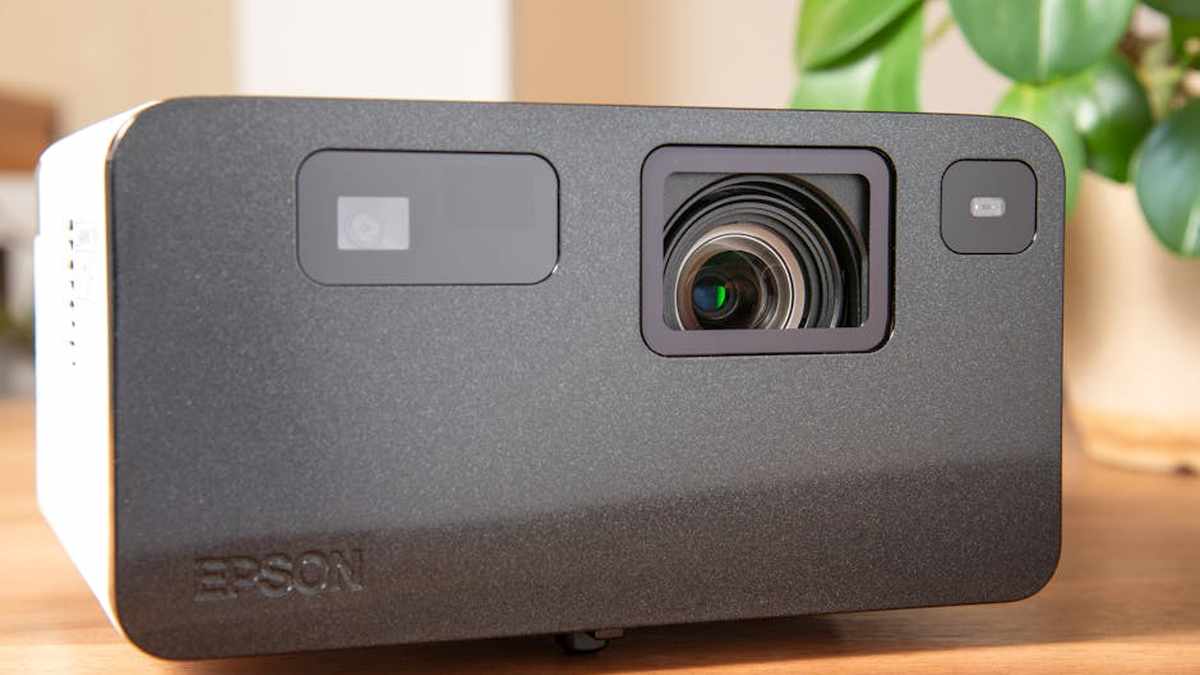
Epson Home Cinema LS12000 (4K PRO-UHD Laser)
Product Overview
The Epson Home Cinema LS12000 has garnered significant acclaim for delivering exceptional 4K HDR performance at a highly competitive price point. Utilizing Epson’s sophisticated 4K PRO-UHD pixel-shifting technology and a powerful laser light source, it produces a remarkably sharp and bright image that often rivals native 4K projectors in perceived detail. Its robust feature set and flexible installation options make it a top contender for dedicated media rooms where value and brightness are key.
Key Features
- 4K PRO-UHD Pixel Shifting: Achieves a highly detailed 4K image by rapidly shifting individual pixels, creating an illusion of true 4K.
- High Brightness Laser Light Source: A powerful 2700-lumen laser delivers vibrant HDR and excellent performance on large screens.
- Wide Lens Shift and Zoom: Exceptional installation flexibility, simplifying setup in various room configurations.
- Low Input Lag: Excellent for gaming, competitive with dedicated gaming projectors.
Pros
- Outstanding brightness for vibrant HDR on large screens.
- Excellent perceived 4K detail, very close to native 4K.
- Long-lasting, maintenance-free laser light source.
- Extremely flexible installation with wide lens shift and zoom.
- Very low input lag for superior gaming performance.
- Strong overall value proposition for its performance tier.
Cons
- Not true native 4K resolution (though visually very close).
- Dynamic contrast is high, but native contrast doesn’t match JVC’s D-ILA.
- Black levels, while good, might not satisfy the absolute pickiest videophiles compared to JVC.
- Larger chassis size than some competitors.
Who Should Buy
The Epson LS12000 is ideal for users seeking a highly bright, sharp, and feature-rich 4K HDR projector that offers incredible value. If you want excellent HDR performance, robust gaming capabilities, and a maintenance-free laser in a dedicated media room without breaking the bank for native 4K, the LS12000 is a top-tier choice.
Who Should Avoid
The absolute purist who insists on native 4K resolution and reference-level native contrast above all else, regardless of budget. If your media room is exceptionally small and you only project onto a very modest screen size, some of its brightness might be overkill, though adjustable.
Pricing Insight
The LS12000 stands out for its exceptional performance-to-price ratio. It offers many premium features, including a laser light source and compelling 4K HDR, at a price point often significantly below native 4K laser competitors, making it a “sweet spot” for many buyers.
Pricing Insight: Navigating the Investment Tiers
The projector market for dedicated media rooms spans a wide financial spectrum. Generally, lamp-based native 4K projectors like the JVC NP5 (approx. $7,000-$8,000) offer superb image quality, especially in contrast, but come with the ongoing cost and inconvenience of lamp replacement. Stepping up to laser-powered native 4K, such as the Sony XW5000ES (approx. $5,000-$6,000), provides longevity, consistent brightness, and often faster response times, albeit sometimes with a slight trade-off in native contrast at this price point. The Epson LS12000 (approx. $4,000-$5,000) represents a phenomenal value, offering a laser light source, high brightness, and incredibly convincing 4K pixel-shifting at a price point that significantly undercuts native 4K laser models, making it a market disruptor. Buyers should weigh the initial investment against long-term operational costs and desired performance metrics.
Alternatives to Consider
While the focus here is on premium dedicated media room projectors, other categories offer compelling alternatives depending on specific needs:
- Higher-Tier Native 4K Laser: JVC DLA-NZ7/NZ8/NZ9, Sony VPL-XW6000ES/XW7000ES. These models offer even brighter lasers, improved optics, and often higher native contrast ratios for the absolute best performance, but at a significantly increased cost.
- DLP Pixel Shifting Projectors: Brands like BenQ (e.g., HT4550i, HT5550), Optoma (e.g., UHZ65LV), and ViewSonic offer excellent 4K pixel-shifting solutions, often at lower price points than the Epson LS12000. While they may not match the Epson’s black levels or light uniformity, they provide great brightness and sharpness for their cost.
- Ultra Short Throw (UST) Projectors: For rooms where a long throw distance is impractical or a giant screen is desired without intrusive ceiling mounts, UST projectors (e.g., LG HU915QB, Samsung LSP9T, Hisense L9G/L9H) can project a massive image from inches away from the wall. While good, they typically struggle to match the black levels, contrast, and subtle detail of traditional long-throw projectors in a dedicated theater setup.
Buying Guide: Key Considerations for Your Dedicated Media Room
- Room Lighting Control: A dedicated media room implies near-total light control. This allows you to prioritize contrast and black levels, even if the projector has slightly lower peak brightness. If any ambient light is unavoidable, a brighter projector becomes more critical.
- Screen Size and Gain: The larger your screen, the more brightness you’ll need. A high-gain screen can boost perceived brightness but may introduce hot-spotting. A neutral-gain (1.0) screen is generally preferred for color accuracy and viewing angle consistency in a dark room.
- Throw Distance and Lens Shift: Ensure the projector’s throw ratio and lens shift capabilities match your room dimensions and preferred mounting location. Projectors with wider lens shift offer significantly more installation flexibility.
- Contrast vs. Brightness: For dedicated dark rooms, native contrast and deep blacks often contribute more to perceived image depth and “pop” than raw brightness, especially for movies. HDR, however, benefits from both.
- Gaming Requirements: If gaming is a significant use case, pay close attention to input lag specifications. Projectors with “gaming modes” often offer lower latency.
- Light Source: Lamp-based projectors are often more affordable upfront but require replacements. Laser light sources offer longevity (20,000+ hours), instant on/off, and consistent brightness over time, but typically increase the initial purchase price.
- Future-Proofing: Look for HDMI 2.1 support (though less critical for projectors than TVs due to bandwidth usage), HDR10+, and HLG compatibility if these are important for your content consumption.
- Calibration: For optimal performance, especially with HDR, professional calibration is highly recommended to fine-tune your projector to your specific screen and room environment.
Conclusion
Selecting the best home theater projector for a dedicated media room involves a nuanced balance of technology, performance, and budget. For the absolute purist prioritizing reference-level native contrast and a deeply cinematic experience, the JVC DLA-NP5, despite being lamp-based, remains a formidable contender. If a native 4K laser light source, excellent sharpness, strong motion, and low input lag for gaming are paramount, the Sony VPL-XW5000ES offers a compelling blend of premium features and accessibility. For those seeking outstanding 4K HDR performance, high brightness, and a laser light source at an exceptional value, the Epson Home Cinema LS12000 stands out as a market leader, proving that pixel-shifting can rival native 4K in most real-world scenarios. Ultimately, the ‘best’ projector is the one that aligns most closely with your personal viewing priorities, room environment, and financial investment strategy.
No Guarantees: The information provided in this review is based on publicly available specifications, common industry benchmarks, and general market analysis at the time of writing. Performance metrics (e.g., contrast ratios, brightness in real-world scenarios) can vary based on setup, calibration, screen type, room acoustics, and individual unit variation. Prices are approximate and subject to change by retailers and manufacturers. Users should conduct their own research and consider professional advice before making a purchase decision. This article is for informational purposes only and does not constitute an endorsement or warranty for any specific product.
Related Articles
- NAS Devices for Home Media Servers: Plex Compatibility and Drive Redundancy
- High-Fidelity Bluetooth Transmitters for Audiophile Home Stereo Systems
- Ultra-Wide Monitors for Professional Video Editors: Aspect Ratios and Color Accuracy
- Entry-Level Mirrorless Cameras for Vlogging: Image Stabilization and Audio Focus
- Smart Thermostats with Geofencing for Energy Savings in US Homes
For a dedicated media room, how crucial is native 4K HDR support compared to other features like contrast ratio or color accuracy, and which should I prioritize for the best cinematic experience?
While native 4K resolution provides incredible detail and HDR delivers a stunning range of brightness and colors, for a truly cinematic experience in a dedicated media room, an exceptional contrast ratio and precise color accuracy are equally, if not more, critical. A projector with excellent contrast will render deep blacks and bright whites, creating a sense of depth and realism that even perfect 4K resolution can’t achieve alone. HDR content specifically thrives on high contrast to reveal subtle details in both shadows and highlights. Therefore, prioritize a projector that balances all three: true 4K resolution, robust HDR processing, and a high native contrast ratio with accurate color reproduction, as they work synergistically to create an immersive picture.
What is the ideal brightness (lumens) range for a 4K HDR projector in a dedicated, light-controlled media room, and how does too much or too little brightness impact the overall picture quality and HDR performance?
For a dedicated, fully light-controlled media room, an ideal brightness range for a 4K HDR projector typically falls between 1,800 to 3,000 ANSI lumens, depending on your screen size and gain. Too little brightness will make HDR content look dim and lose its impact, failing to deliver vibrant highlights. Conversely, too much brightness in a dark room can “wash out” black levels, reducing the crucial contrast needed for deep, immersive images and a true HDR experience. Optimal brightness ensures highlights pop without sacrificing rich black levels, allowing the projector to fully utilize its dynamic range for accurate HDR presentation and a comfortable viewing experience without eye strain.
When investing in a 4K HDR projector for a dedicated media room, what key features or specifications truly justify a higher price point, and at what budget level can I expect a significant step up in true cinematic performance?
A higher price point in 4K HDR projectors for dedicated media rooms is often justified by features that deliver superior image fidelity and longevity. Key differentiators include a true native 4K resolution chip (rather than pixel shifting 1080p), a high-quality all-glass lens assembly for sharper focus across the entire screen, advanced image processing for better motion handling and upscaling, a superior native contrast ratio (often found in LCoS or high-end DLP models), and a wider color gamut coverage (e.g., 90%+ DCI-P3). Laser light sources, while pricier, offer significantly longer lifespans, consistent brightness, and instant on/off. Expect a notable step up in true cinematic performance, particularly in contrast and color accuracy, once you move into the $3,000-$5,000+ budget range, where these premium components and technologies become more prevalent.
Considering a dedicated media room setup, should I prioritize a lamp-based or laser-based 4K HDR projector, particularly regarding longevity, consistent brightness, and overall maintenance requirements?
For a dedicated media room, you should strongly prioritize a laser-based 4K HDR projector over a lamp-based one, despite the higher initial cost. Laser projectors offer significantly superior longevity, typically providing 20,000 to 30,000 hours of operation before major maintenance or replacement, compared to 2,000-5,000 hours for lamps. This translates to years of maintenance-free use and eliminates the recurring cost and hassle of lamp replacements. Furthermore, laser light sources maintain consistent brightness and color output over their lifespan far better than lamps, which degrade noticeably over time. Laser projectors also offer instant on/off capabilities and often run quieter, enhancing the overall convenience and immersive experience in a dedicated theater space.