



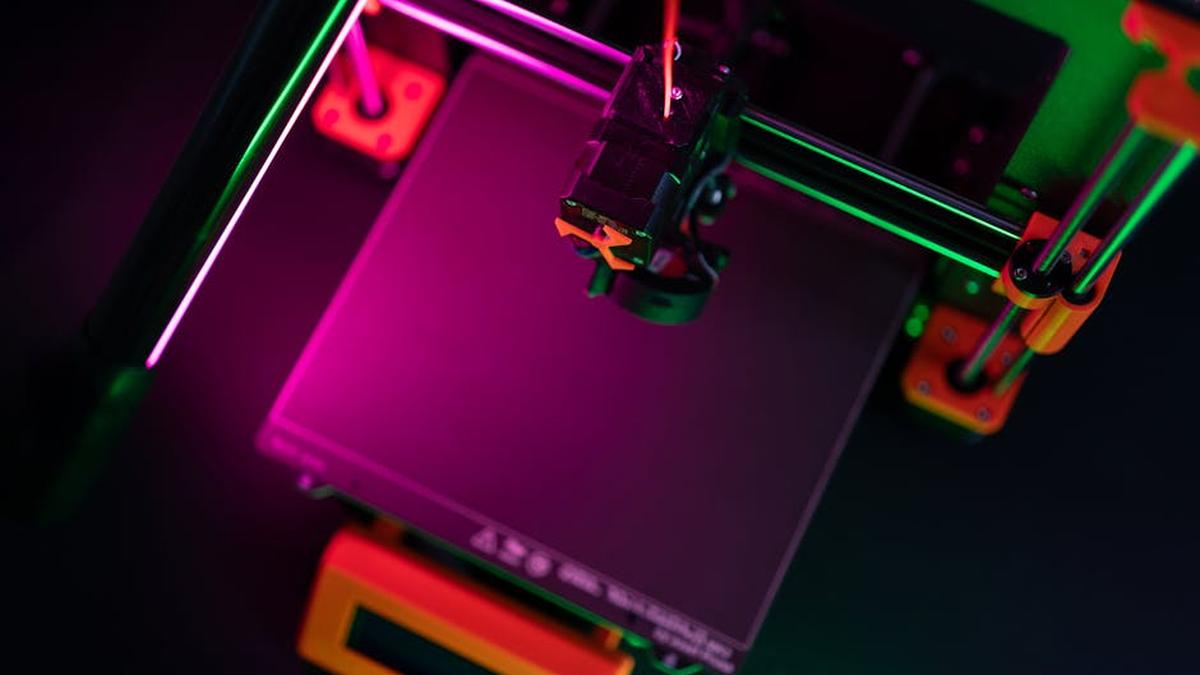
Budget-Friendly 3D Printers for Hobbyists: Resin vs. FDM Technologies – Your Startup Guide to Personal Fabrication
Alright, fellow innovators and aspiring makers, let’s talk shop. You’re looking to dive into the incredible world of 3D printing, but you’re not trying to take out a second mortgage to get started. Smart move. The good news is, today’s market offers fantastic entry-level options for hobbyists. The big question, though, boils down to a fundamental choice: FDM (Fused Deposition Modeling) or Resin (SLA/MSLA)? Each technology is a powerhouse in its own right, but they cater to very different needs and project types. Let’s break down these two titans of desktop fabrication to help you invest wisely in your next creative tool.
The Contenders: FDM vs. Resin for the Hobbyist
For our comparison, we’ll consider two popular and representative budget-friendly options that embody their respective technologies, giving you a tangible reference point for features and performance.
Product A (FDM): The Creality Ender-3 V3 SE
The Ender series has long been the gateway drug for many FDM enthusiasts, and the V3 SE continues this legacy. It’s an iterative improvement on a classic, offering a robust platform for printing functional prototypes, larger models, and a wide variety of parts using plastic filaments. It’s known for its relatively straightforward operation and extensive community support. Top OLED Monitors for Graphic
Product B (Resin): The Anycubic Photon Mono 2
Anycubic’s Photon series has democratized resin printing, making high-detail models accessible to the average hobbyist. The Mono 2, like its predecessors, uses a monochrome LCD screen to cure liquid resin layer by layer, resulting in incredibly smooth surfaces and intricate details perfect for miniatures, jewelry prototypes, and highly aesthetic models. Salesforce Nonprofit Cloud Review: Tailored
| Feature | Creality Ender-3 V3 SE (FDM) | Anycubic Photon Mono 2 (Resin) |
|---|---|---|
| Technology | Fused Deposition Modeling (FDM) | Masked Stereolithography (MSLA) |
| Print Quality / Detail | Good, visible layer lines. Detail limited by nozzle size. | Excellent, smooth surfaces, extremely fine details. |
| Build Volume (Typical) | Generous (e.g., 220x220x250mm) | Smaller (e.g., 165x89x180mm) |
| Materials | Filament (PLA, PETG, ABS, TPU, etc.) | Liquid Resin (Standard, ABS-like, Flexible, Castable, Dental, etc.) |
| Ease of Use (Initial) | Moderate assembly, basic calibration. | Minimal assembly, easier initial leveling. |
| Ease of Use (Ongoing) | Relatively clean, filament changes. | Messy, handling liquid resin and chemicals. |
| Post-processing | Support removal, light sanding if desired. | Washing (IPA), Curing (UV light), Support removal. |
| Print Speed (Relative) | Slower for high detail, faster for large, simple parts. | Fast for batch printing small items, layer time constant. |
| Maintenance | Nozzle cleaning, bed leveling, occasional part replacement. | Vat cleaning, screen protection, resin disposal. |
| Safety Considerations | Hot nozzle/bed, fumes from some materials. | Chemical exposure (skin/fumes), UV light, ventilation required. |
| Typical Price Range (Printer) | $170 – $250 USD | $160 – $280 USD |
Key Features, Pros, and Cons
FDM (e.g., Creality Ender-3 V3 SE)
- Key Features: Direct Drive Extrusion (better for flexibles), Auto Bed Leveling (CR Touch), high-speed printing capabilities (for its class), sturdy build.
- Pros:
- Lower ongoing material costs (filament is generally cheaper).
- Wider range of functional materials (stronger, more flexible plastics).
- Larger build volumes for printing bigger parts.
- Less messy operation and easier cleanup.
- Parts tend to be more robust and suitable for functional prototypes.
- Excellent community support and troubleshooting resources.
- Cons:
- Visible layer lines mean lower aesthetic quality out-of-the-box.
- Not ideal for extremely fine details or intricate miniature work.
- Can be prone to issues like warping, stringing, and bed adhesion if not tuned correctly.
- Slower for highly detailed small prints.
Resin (e.g., Anycubic Photon Mono 2) Best USB-C Docks for M3
- Key Features: High-resolution monochrome LCD for faster curing and longer screen life, improved light source for uniform prints, user-friendly interface.
- Pros:
- Unrivaled detail and incredibly smooth surface finish.
- Ideal for miniatures, jewelry, artistic models, and highly aesthetic parts.
- Faster for batch printing multiple small, identical objects.
- Can produce intricate geometries that FDM struggles with.
- Cons:
- Significantly messier operation due to liquid resin.
- Requires extensive post-processing (washing with IPA, UV curing).
- Resins are more expensive per print and can be toxic/fume-emitting.
- Smaller build volumes limit the size of prints.
- Requires specific safety gear (gloves, masks, good ventilation).
- Prints can be more brittle than FDM parts unless specific resins are used.
Who Should Buy Each
- You should buy an FDM printer if…
- You’re looking to print functional parts, enclosures, tools, or larger models.
- Your primary concern is cost-effectiveness for materials.
- You want to experiment with a wide array of plastic types (PLA, PETG, ABS, TPU).
- You’re less concerned with microscopic detail and more with practicality and strength.
- You prefer a less messy workflow and don’t want to deal with chemical handling.
- You’re new to 3D printing and want a more forgiving entry point.
- You should buy a Resin printer if…
- Your projects demand exceptional detail, smooth surfaces, and intricate designs (e.g., miniatures, jewelry, display models).
- You’re willing to invest time in post-processing (washing, curing).
- You understand and are prepared for the safety protocols involved with liquid resin.
- You have adequate ventilation and space for a dedicated printing and post-processing setup.
- You value aesthetic quality and precision above all else for your specific applications.
Who Should Avoid Each
- You should avoid an FDM printer if…
- You absolutely require perfectly smooth, high-detail models directly off the print bed without extensive post-processing.
- Your projects are exclusively very small, highly intricate miniatures or delicate artistic pieces.
- You should avoid a Resin printer if…
- You have limited space, poor ventilation, or sensitivity to chemicals.
- You’re looking for an extremely low-maintenance, “set-it-and-forget-it” experience.
- Your primary need is for large, robust, functional prototypes, or parts that will endure significant stress.
- You’re not prepared to invest in safety gear and cleaning supplies.
Pricing Insight: Beyond the Initial Tag
The initial purchase price for budget FDM and Resin printers is surprisingly similar, often hovering in the $150-$350 range for a good entry-level machine. However, the real entrepreneurial insight comes from understanding the total cost of ownership.
- FDM: Filament rolls typically cost $15-$30 for a kilogram. A kilogram goes a long way. Cleaning supplies are minimal.
- Resin: A 1-liter bottle of standard resin costs $25-$50. You’ll also need isopropyl alcohol (IPA) for washing (which needs to be regularly replaced/recycled), disposable gloves, paper towels, and possibly a dedicated UV curing station (though sunlight or DIY solutions work). These consumables add up quickly.
Factor in these recurring costs. For high-volume printing, FDM often wins on long-term material expenses. DJI Mini 4 Pro vs.
Alternatives to Consider
Before you pull the trigger, consider these angles:
- Higher-End Desktop Printers: If your budget stretches, printers like Prusa (FDM) or Saturn/Mighty series (Resin) offer enhanced features, reliability, and often larger build volumes.
- 3D Printing Services: For a one-off project, or if you want to test out a specific technology without buying a machine, using a service like Shapeways or local print shops can be a cost-effective solution.
- Other Fabrication Methods: Depending on your “why,” consider CNC routing for subtractive manufacturing, laser cutting for flat parts, or even traditional crafting methods.
Your Entrepreneur’s Buying Guide
- Define Your “Why”: What are you actually going to print? Functional tools? Artistic miniatures? This is the most crucial step. Let your project dictate the technology.
- Assess Your Space and Ventilation: Seriously, this is not optional for resin printing. You need a well-ventilated area, ideally away from living spaces.
- Budget for Consumables and Safety: Don’t just look at the printer price. Factor in filament/resin, IPA, gloves, masks, and cleaning supplies.
- Research Community Support: Brands with strong online communities (like Creality and Anycubic) mean readily available troubleshooting, mods, and tips.
- Software Compatibility: Ensure the printer is compatible with popular slicer software (Cura, PrusaSlicer for FDM; Lychee, Chitubox for Resin).
- Watch Reviews (Practical Ones): Look for reviews that focus on real-world use, common issues, and the learning curve, not just unboxing videos.
Conclusion: Your Tool for Your Vision
There’s no single “best” budget 3D printer for hobbyists; there’s only the best printer for your specific needs and projects. As an entrepreneur, you understand that the right tool can make or break a venture. FDM printers are the workhorses – versatile, cost-effective for functional parts, and forgiving for beginners. Resin printers are the precision instruments – delivering breathtaking detail for those demanding visual perfection and willing to embrace a more involved workflow.
Evaluate your goals, your space, and your tolerance for mess and complexity. Whichever path you choose, entering the world of personal 3D fabrication opens up an incredible realm of creativity and practical problem-solving. Make an informed decision, and happy printing! Robot Vacuums with LiDAR Navigation
Disclaimer: The information provided in this article is for general guidance and informational purposes only, and does not constitute professional advice or a guarantee of performance. Product features, specifications, and prices are subject to change by manufacturers. Always consult official product documentation and conduct your own research before making any purchasing decisions. We do not guarantee specific outcomes or results from using the mentioned products or technologies. Your experience may vary.
Related Articles
- Top OLED Monitors for Graphic Designers Under $800 in 2024
- Salesforce Nonprofit Cloud Review: Tailored CRM for US Non-Profit Organizations.
- Best USB-C Docks for M3 MacBook Pro Users: Port Selection and Power Delivery Analysis
- DJI Mini 4 Pro vs. Autel EVO Nano+: Sub-250g Drone Photography Comparison
- Robot Vacuums with LiDAR Navigation and Self-Emptying Bins: A Comprehensive Guide
Considering budget, which type of 3D printer (Resin or FDM) offers better overall value for a hobbyist, factoring in initial cost and ongoing material expenses?
When evaluating overall value, FDM printers often have a lower initial cost and filament is generally cheaper per kilogram than resin. However, budget resin printers are now very affordable, and for smaller, highly detailed prints, resin can be more cost-effective as you use less material. If your projects involve larger functional parts or prototypes, FDM typically wins on material cost. For miniature production, the higher resolution of resin might make it a better value, despite potentially higher material costs per ml, due to superior finished product quality.
I want to print highly detailed miniatures and small, intricate models. Should I prioritize a budget resin printer, or can a good FDM printer achieve satisfactory results for these projects?
For highly detailed miniatures and intricate models, a budget resin (SLA/DLP) printer is almost always the superior choice. Resin printers excel at producing fine details, smooth surfaces, and crisp edges that FDM printers, even high-end ones, struggle to match at an entry-level price point. While FDM can print miniatures, you will likely see visible layer lines and may lose intricate details. If detail is your top priority, especially for painting and display, choose resin.
As a beginner hobbyist, which technology – budget Resin or FDM – will be easier to set up, learn, and maintain without requiring extensive technical knowledge?
For a beginner hobbyist, budget FDM printers are generally considered easier to set up, learn, and maintain. FDM involves fewer post-processing steps and less hazardous materials. You typically load filament and print. Resin printers, while becoming more user-friendly, still require more careful handling of liquid resin, a more involved cleaning and curing process, and proper ventilation. If you prioritize a simpler entry into 3D printing with less mess and fewer safety considerations, FDM is often the more beginner-friendly option.
What are the critical workspace and safety considerations I need to account for when deciding between a budget resin or FDM printer for use in a home environment?
Workspace and safety are key decision factors. FDM printers primarily produce plastic fumes, which are generally manageable with good ventilation, and don’t require much dedicated space beyond the printer itself. Resin printers, however, require a well-ventilated area, as the liquid resin and its fumes can be toxic and irritating. You’ll also need space for washing and UV-curing printed parts, and dedicated PPE (gloves, eye protection) is essential. If you have limited space, poor ventilation, or prefer to avoid handling chemicals, an FDM printer might be a safer and more convenient choice for a home environment.