




Introduction: Navigating the Mid-Range 1440p Landscape
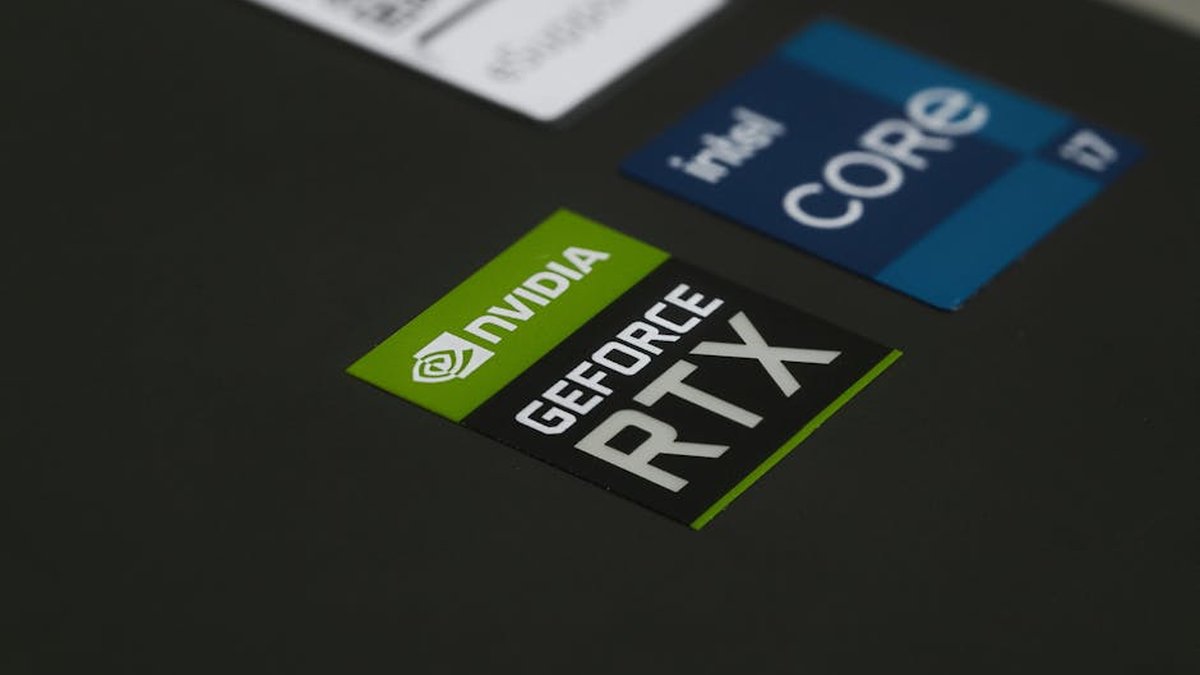
The 1440p resolution segment represents a sweet spot for many PC gamers, offering a significant visual upgrade over 1080p without the extreme hardware demands of 4K. In this competitive arena, two distinct GPU architectures vie for market share: Intel’s nascent Arc A770 and NVIDIA’s established GeForce RTX 4060 Ti. This analysis aims to dissect their performance, features, and value proposition specifically for a 1440p gaming experience, employing a data-driven approach to guide potential buyers through their next upgrade decision.
| Feature | Intel Arc A770 (16GB) | NVIDIA GeForce RTX 4060 Ti (8GB) |
|---|---|---|
| Architecture | Xe HPG Alchemist | Ada Lovelace |
| Manufacturing Process | TSMC N6 | TSMC 4N (custom) |
| Xe Cores / CUDA Cores | 32 Xe Cores / 512 EUs | 4352 CUDA Cores |
| Ray Tracing Units | 32 RT Units | 34 RT Cores (3rd Gen) |
| Tensor Cores / XMX Engines | 512 XMX Engines | 136 Tensor Cores (4th Gen) |
| VRAM | 16 GB GDDR6 | 8 GB GDDR6 |
| Memory Interface | 256-bit | 128-bit |
| Memory Bandwidth | 560 GB/s | 288 GB/s (456 GB/s effective with cache) |
| Boost Clock (Reference) | 2100 MHz | 2535 MHz |
| TDP / TBP | 225W | 160W |
| Upscaling Technology | XeSS | DLSS 3 (incl. Frame Generation) |
| AV1 Encode/Decode | Full Hardware Support | Full Hardware Support |
| Avg. 1440p Raster (Relative) | ~70-90% of RTX 4060 Ti | ~100% (Baseline) |
| Avg. 1440p RT (Relative) | Varies (can be competitive to 4060 Ti) | ~100% (Baseline, strong) |
Product Overview
The Intel Arc A770, particularly the 16GB variant, represents Intel’s ambitious entry into the discrete gaming GPU market. Positioned as a value-oriented contender, it aims to deliver respectable 1440p performance, leveraging its Xe HPG architecture and substantial VRAM buffer. It often appeals to users seeking an alternative to the dominant duopoly and those on a more constrained budget.
The NVIDIA GeForce RTX 4060 Ti (8GB), built on the efficient Ada Lovelace architecture, is NVIDIA’s mainstream offering for 1440p. It emphasizes power efficiency and introduces DLSS 3 with Frame Generation, a technology designed to significantly boost frame rates in supported titles. Its performance is generally consistent, backed by NVIDIA’s mature driver ecosystem. Dropbox Business vs. Google Drive
Key Features
Intel Arc A770:
- Xe HPG Architecture: Designed for modern gaming workloads, with dedicated Ray Tracing Units and XMX Engines for AI acceleration (XeSS).
- High VRAM (16GB): Offers a generous memory buffer, potentially future-proofing for demanding 1440p titles with high-resolution textures.
- Full AV1 Encode/Decode: A significant advantage for content creators, offering superior compression efficiency.
- XeSS Upscaling: Intel’s AI-powered upscaling technology, providing a performance uplift in supported games.
NVIDIA GeForce RTX 4060 Ti:
- Ada Lovelace Architecture: Delivers significant power efficiency improvements over previous generations.
- DLSS 3 with Frame Generation: A headline feature that interpolates new frames between rendered ones, providing substantial FPS gains in compatible titles.
- 3rd Gen RT Cores & 4th Gen Tensor Cores: Enhanced hardware for improved ray tracing performance and AI acceleration.
- NVENC Encoder: NVIDIA’s industry-leading encoder, highly regarded by streamers and content creators for its quality and performance.
Pros and Cons
Intel Arc A770
- Pros:
- Strong price-to-performance ratio in certain titles, especially with Ray Tracing enabled.
- Generous 16GB VRAM is excellent for 1440p high textures.
- Full AV1 hardware support for content creation.
- Competitive ray tracing performance for its price point.
- Positive driver development trajectory, though still evolving.
- Cons:
- Driver maturity can be inconsistent; some older APIs or games may exhibit suboptimal performance.
- Higher power consumption (TDP) compared to the RTX 4060 Ti.
- Requires Resizable BAR (ReBAR) / Smart Access Memory (SAM) for optimal performance, limiting compatibility with older CPU platforms.
- Less stable minimum frame rates in some scenarios.
NVIDIA GeForce RTX 4060 Ti (8GB)
- Pros:
- Exceptional power efficiency (160W TDP).
- DLSS 3 Frame Generation offers significant FPS boosts in supported games.
- Mature and highly optimized drivers, ensuring broad game compatibility and consistent performance.
- Strong rasterization performance at 1440p.
- Excellent NVENC encoder for streaming and video editing.
- Cons:
- 8GB VRAM can be a limitation for some demanding 1440p titles, particularly with high-resolution textures and ray tracing.
- 128-bit memory bus can constrain bandwidth in certain scenarios.
- Questionable generational uplift over previous NVIDIA cards (e.g., RTX 3060 Ti) in raw rasterization.
- Higher launch price compared to its performance gains (without DLSS 3) and VRAM capacity.
Who Should Buy
- Intel Arc A770:
- Budget-Conscious Gamers: Seeking the best value for money, willing to accept occasional driver quirks for significant savings.
- Content Creators: Especially those utilizing AV1 encoding for streaming or video production.
- Enthusiasts & Early Adopters: Interested in supporting a new player in the GPU market and witnessing driver improvements firsthand.
- Users with Modern Platforms: Who can fully leverage Resizable BAR for optimal performance.
- NVIDIA GeForce RTX 4060 Ti:
- Gamers Prioritizing Efficiency: Those building compact systems or concerned with power consumption.
- Users Seeking Consistent Performance: Wanting a “set it and forget it” experience with mature drivers and broad game compatibility.
- DLSS 3 Advocates: For whom Frame Generation offers a compelling performance advantage in supported titles.
- Existing NVIDIA Ecosystem Users: Who value features like NVENC, Reflex, and the established driver support.
Who Should Avoid
- Intel Arc A770:
- Users Demanding Absolute Stability: Those who cannot tolerate potential performance inconsistencies or needing the highest frame rates in every single title.
- Users with Older Platforms: Without Resizable BAR support, as performance will be significantly hampered.
- Casual Gamers: Who prefer a plug-and-play experience without the need for occasional driver updates or troubleshooting.
- NVIDIA GeForce RTX 4060 Ti:
- Gamers Needing Ample VRAM: If playing highly demanding 1440p titles with ultra-high texture settings and ray tracing is a priority, 8GB can be a bottleneck.
- Strict Budget Users: The price-to-performance ratio (especially for 8GB) without DLSS 3 might feel underwhelming.
- Users Upgrading from High-End 30-Series: May not see a significant enough rasterization uplift to justify the cost.
Pricing Insight
Historically, the Intel Arc A770 (16GB) has been available at a significantly lower MSRP, often fluctuating between $280-$350 USD, making it a compelling option for value. The NVIDIA RTX 4060 Ti (8GB) launched at an MSRP of $399 USD, with street prices typically adhering closely to this, sometimes slightly higher. The price difference often positions the A770 as a more accessible entry point for 1440p gaming, provided its performance quirks are acceptable.
Alternatives
- AMD Radeon RX 7700 XT / RX 7800 XT: Strong contenders from AMD, often offering superior raw rasterization performance at competitive price points for 1440p, along with FSR 3 support.
- NVIDIA GeForce RTX 4070: If the budget allows for an uplift of approximately $100-$150, the RTX 4070 offers a noticeable step up in performance and VRAM (12GB) over the 4060 Ti, making it a more robust 1440p card.
- Used RTX 30-series (e.g., 3070, 3070 Ti): For savvy buyers, the used market can offer excellent value, with cards that still deliver solid 1440p performance, potentially outperforming both new contenders for a similar price.
- RTX 4060 Ti 16GB: While addressing the VRAM concern, its higher price point (MSRP $499) positions it against even stronger alternatives from AMD.
Buying Guide
- Assess Your Budget: Determine your absolute maximum spend. The A770 typically offers more performance per dollar, but the 4060 Ti offers a more premium feature set.
- Evaluate Your CPU & Platform: Ensure your motherboard and CPU support Resizable BAR for the Arc A770. If not, the A770’s performance will suffer, making the 4060 Ti a safer bet.
- Consider Your Game Library & Priorities:
- If Ray Tracing & DLSS 3 are paramount: The RTX 4060 Ti is generally superior due to mature implementation and Frame Generation.
- If Raw Rasterization & VRAM for future-proofing are key: The A770 can be competitive, especially in titles that scale well with its architecture and benefit from 16GB VRAM.
- If you play older titles (DX11/DX9): NVIDIA typically offers better legacy support and performance consistency.
- Power Supply Requirements: Check your PSU’s wattage. The A770 requires more power (225W TBP vs 160W for 4060 Ti).
- Monitor Resolution & Refresh Rate: Both cards are suitable for 1440p, but the 4060 Ti with DLSS 3 might achieve higher refresh rates in supported games.
Conclusion
The choice between the Intel Arc A770 and NVIDIA RTX 4060 Ti for 1440p gaming is not straightforward; it’s a nuanced decision based on specific user priorities and tolerance for evolving technology. The Intel Arc A770 (16GB) stands out as a strong value proposition, particularly for those willing to embrace a newer ecosystem, benefit from its generous VRAM, and leverage AV1 capabilities. Its occasional driver inconsistencies are its primary drawback, but performance continues to improve.
Conversely, the NVIDIA GeForce RTX 4060 Ti (8GB) offers a highly efficient, stable, and feature-rich experience, anchored by the significant advantages of DLSS 3 Frame Generation. Its main weaknesses lie in its comparatively higher price and the 8GB VRAM limitation, which can be a concern for demanding 1440p titles moving forward. Ultimately, if raw value and a strong VRAM buffer are your priority, the A770 is compelling. If stability, power efficiency, and access to leading-edge upscaling technology are paramount, the RTX 4060 Ti remains a solid, albeit more expensive, choice for 1440p. Notion for Project Management: Advanced
Disclaimer: All performance metrics, pricing, and availability mentioned in this article are approximate and subject to change based on market conditions, driver updates, and specific game optimizations. This review is intended for informational purposes only and does not constitute an endorsement or guarantee of performance. Microsoft 365 Business Premium: Unlocking
Related Articles
- Dropbox Business vs. Google Drive Enterprise: Cloud Storage Solutions for US Firms.
- Notion for Project Management: Advanced Strategies for US Creative Teams.
- Microsoft 365 Business Premium: Unlocking Productivity for US Hybrid Workforces.
- QuickBooks Payroll vs. ADP Payroll: Which Service Best Suits US Small Businesses?
- Miro for Design Sprints: Facilitating Innovation for US Product Development Teams.
Which GPU offers better raw performance and value for 1440p gaming: the Intel Arc A770 or the NVIDIA RTX 4060 Ti?
For raw performance at 1440p, the NVIDIA RTX 4060 Ti generally holds an edge over the Intel Arc A770 in many modern AAA titles, often delivering slightly higher average frame rates. However, the value proposition can strongly favor the Arc A770. The A770 is typically available at a lower price point and comes with 16GB of VRAM (compared to the common 8GB of the 4060 Ti), which can be a significant advantage in demanding games at 1440p as textures and assets become more VRAM-intensive. If your budget is tighter and you want excellent value with more VRAM, the A770 is a strong contender. If peak raw performance in most titles and a slightly higher budget is less of a concern, the 4060 Ti often provides a small performance uplift.
Considering future-proofing and ecosystem, which GPU is a safer long-term choice for 1440p gaming: the A770 or 4060 Ti?
NVIDIA’s RTX 4060 Ti benefits from a more mature and widely adopted driver ecosystem, robust features like DLSS 3 (including Frame Generation), and generally superior ray tracing performance, which contribute to a more predictable and potentially safer long-term experience for new 1440p titles. Intel’s Arc A770 has made significant driver improvements and supports XeSS (its own upscaling tech) and hardware ray tracing, but its performance consistency and optimization across all games are still evolving. However, the Arc A770’s 16GB of VRAM is a substantial future-proofing advantage for 1440p gaming, as new games increasingly demand more memory, potentially outstripping the 8GB of the standard RTX 4060 Ti. If established features, widespread game compatibility, and better ray tracing are paramount, the 4060 Ti is often the safer bet. If VRAM capacity and the potential for future performance gains through driver updates are more appealing, the A770 offers a compelling alternative.
If I primarily play modern AAA games or competitive esports titles at 1440p, which GPU should I prioritize?
For competitive esports titles at 1440p, where consistently high frame rates and low latency are crucial, the NVIDIA RTX 4060 Ti generally provides a more reliable and often higher average frame rate experience across a broader range of popular games due to its driver maturity and optimization. When it comes to modern AAA games at 1440p, the comparison is closer. The RTX 4060 Ti often leads in raw rasterization and benefits immensely from DLSS 3 with Frame Generation, making graphically intensive titles very playable. However, the Arc A770’s 16GB of VRAM can be a distinct advantage in some particularly VRAM-hungry AAA games at 1440p, helping to avoid stuttering or texture quality drops that an 8GB RTX 4060 Ti might encounter. Overall, for the most consistent and broadly optimized experience in both AAA and esports at 1440p, the 4060 Ti usually has an advantage, but the A770 is a strong performer, especially in titles that leverage its strengths.
What system compatibility or power considerations should influence my choice between the Arc A770 and RTX 4060 Ti for a 1440p build?
Both GPUs are relatively power efficient, typically recommending a 550W-650W power supply for a full system, with the RTX 4060 Ti generally consuming slightly less power. A critical consideration for the Intel Arc A770 is its strong reliance on Resizable BAR (ReBAR) or Smart Access Memory (SAM) technology. For the A770 to deliver its optimal performance, having ReBAR/SAM enabled on your motherboard and CPU is essential; performance can significantly decrease without it. While the RTX 4060 Ti also benefits from ReBAR, it is not as fundamentally critical for its baseline performance. Intel Arc GPUs also generally perform best when paired with newer CPUs (Intel 10th Gen+ or AMD Ryzen 3000 series+). Ensure your motherboard and CPU support ReBAR if you opt for the A770. Neither card is excessively large, but always check dimensions for case compatibility. Lastly, consider your monitor’s adaptive sync technology (G-Sync for NVIDIA, FreeSync for broader compatibility) as a minor factor.